Four Quadrants
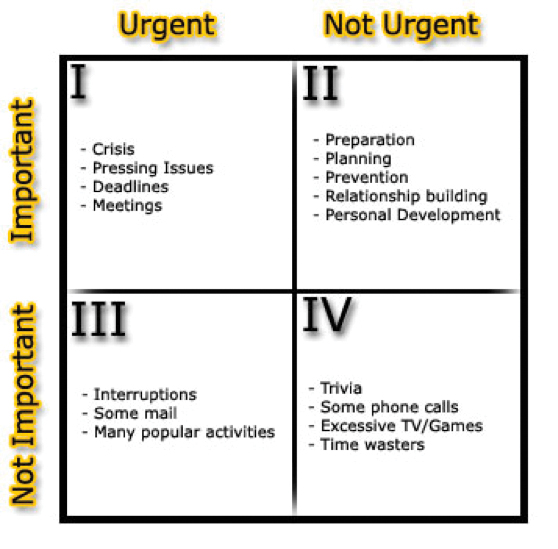 We can divide our time and tasks according to two criteria: how important they are (the vertical axis in the diagram) and how urgent they are (the horizontal axis). As a result of these two criteria, the model creates four squares which Covey calls "quadrants" and which are the keys to your time management performance.
Quadrant 4: Not Urgent and Not Important Tasks
In Quadrant 4 of the Time Management Matrix, (bottom right), are the not important and not urgent tasks. These are the things that we don't need to do but that so often we end up doing to fill in time or because we like doing them. These include aimless web browsing, socialising around the drinks machine, and attending unnecessary meetings. Covey calls these "time-wasters".Jot down your own Quadrant 4 activities and work out how much time you spend on these in a day or a week.
Quadrant 3: Urgent but Not Important Tasks
In Quadrant 3 of the Time Management Matrix, (bottom left), are the urgent but not important tasks. These are the things that we allow to interrupt our working lives because we believe they take precedence over other tasks. The worst examples of such tasks are personal "drop-in" callers, answering every phone call and wading through junk mail. Covey calls these "distractions".Jot down your own Quadrant 3 activities and work out how much time you spend on these in a day or a week.
Quadrant 2: Not Urgent but Important Tasks
In Quadrant 2 of the Time Management Matrix, (top right), are the important but not urgent tasks. These are the tasks that aren't pressing but, if we do them, will ensure fewer, if any, problems down the line. They include time on personal health and development, unhurried "quality time" with others, prevention work, thinking time such as planning and preparation, and clarifying our values. Covey calls these "productive" tasks.Jot down your own Quadrant 2 activities and work out how much time you spend on these in a day or a week.
Quadrant 1: Urgent and Important Tasks
In Quadrant 1 of the Time Management Matrix, (top left), are the urgent and important tasks. These are the things that we have to do because they are our responsibility and need immediate attention. These are usually emergencies, crises, and pressing deadline-driven problems. They may be the result of our procrastination or inability to face up to doing them at the right time. Covey calls these "firefighting" tasks.Jot down your own Quadrant 1 activities and work out how much time you spend on these in a day or a week.
What Your Quadrants Tell You
When you've added up the time you spend in a typical week on each of the four quadrants, this is the action you should take to improve your time management.i. if you spend any significant time on quadrant 4 tasks, (not urgent and not important), stop doing them. If you can't, take a hard long look at why you are spending time on them.
ii. if you are spending any significant time on quadrant 3 tasks, (urgent but not important), realise that, as they are not important to you, you shouldn't be doing them whether they are urgent or not. Delegate them if you can. Dump them if you can't.
iii. if you are spending any significant time on quadrant 1 tasks, (urgent and important), work out why you didn't do them earlier. Get to the root of what stops you doing them before they become urgent.
iv. if you are spending any significant time on quadrant 2 tasks, (important and not urgent), congratulate yourself. This is where you should be spending most of your time. If you are, you already know that life is balanced, productive, and good.